tudor.ages.im
Nine days, a sinking ship, and a palace of canvas
English Heritage dates Tudor England from 1485 to 1603. In those years a teenage queen lasted nine days, Henry VIII watched the Mary Rose go down, and a temporary palace was built with fountains of wine.
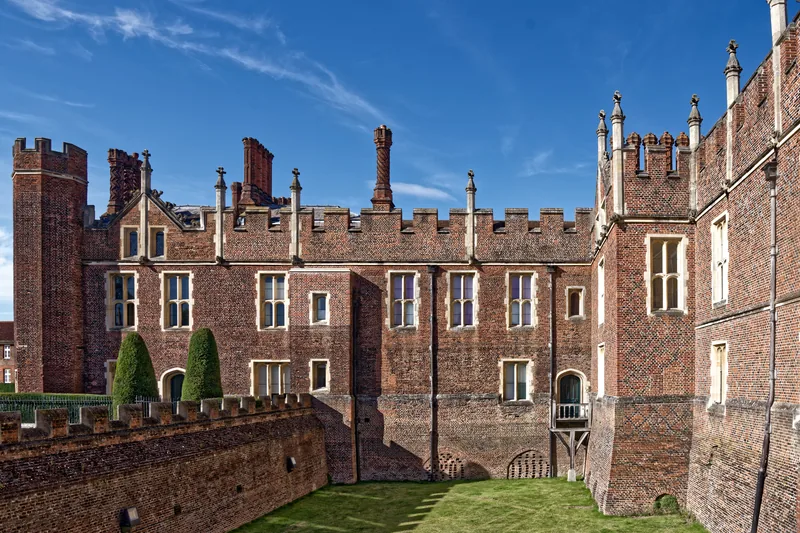
A desk of Tudor stories
Pick a story. A queen who lasted nine days, a ship that sank while the king watched, and a temporary palace with fountains of wine.
The Tudor era, English Heritage says, began with Henry VII’s victory over Richard III at the Battle of Bosworth in 1485, ending the Wars of the Roses. “England underwent huge changes during the reigns of three generations of Tudor monarchs.” [source] [source]
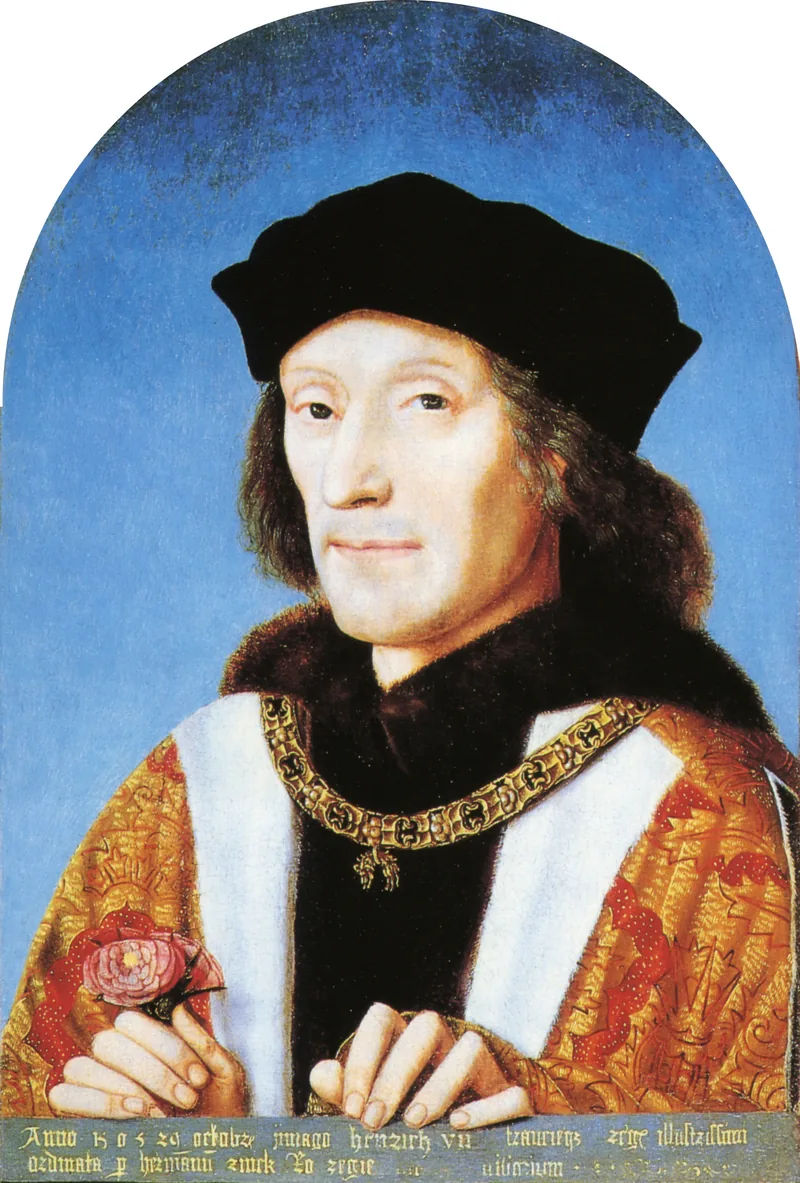
A court that ate 1,600 meals a day
Historic Royal Palaces says the original Tudor Hampton Court was begun by Cardinal Thomas Wolsey in the early 16th century, and that Henry VIII — who had over 60 homes — made it his favourite. By the 1530s it was “a palace, a hotel, a theatre and a vast leisure complex.” The kitchens “became an efficient food factory serving 1600 meals a day.” [source] [source]
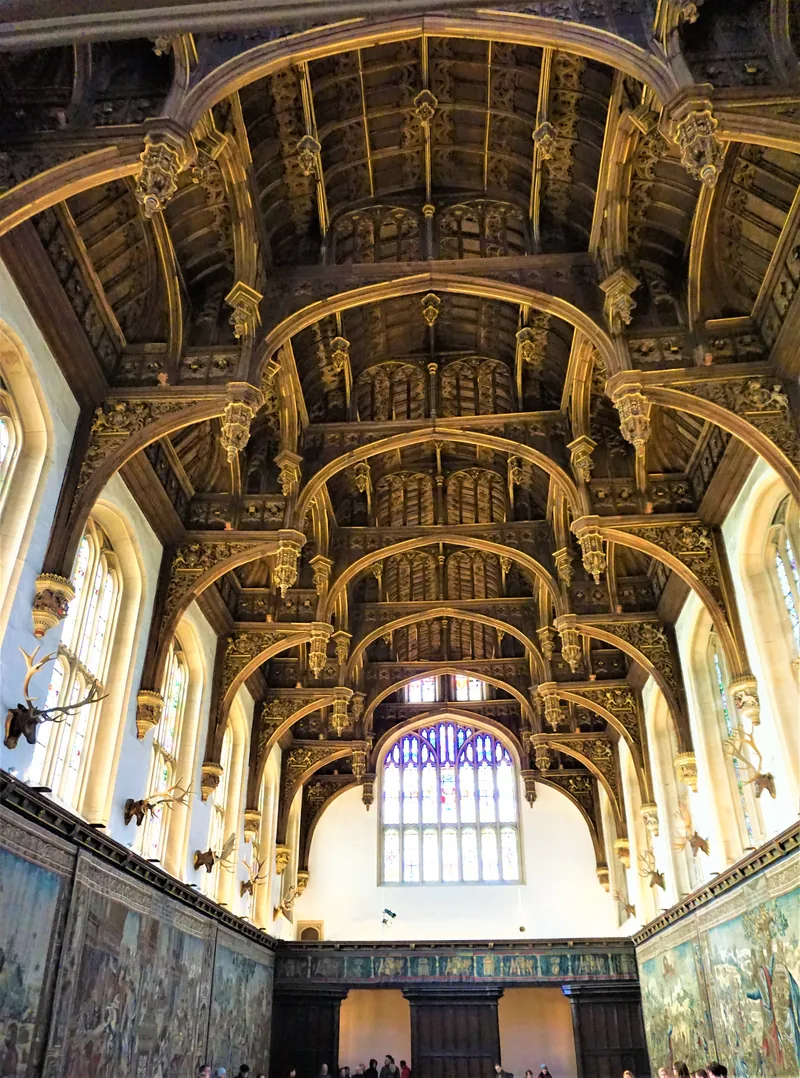
A favourite ship, lost in sight of land
The Mary Rose was built in 1510–11 and was one of Henry’s favourite ships for 34 years. She did not sink on her maiden voyage. On 19 July 1545, during the Battle of the Solent, she foundered. The Mary Rose Trust says the king watched from Southsea Castle. [source] [source]
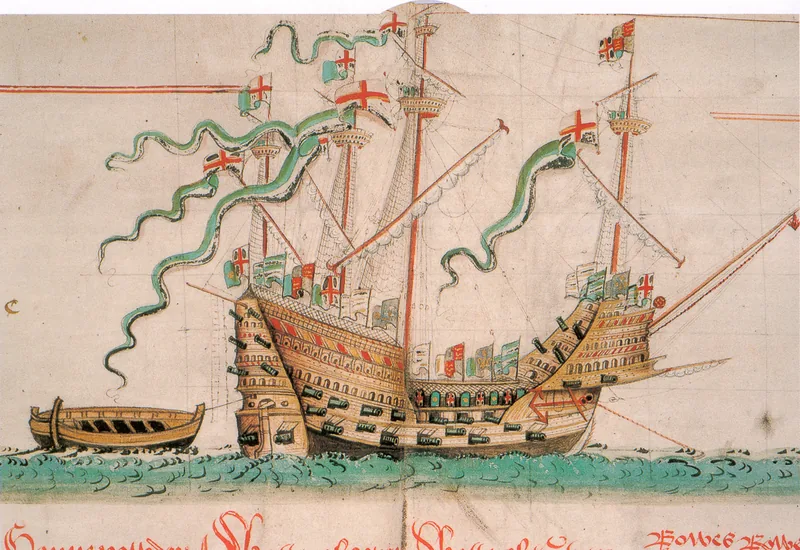
A later 19 July, and eight fireships
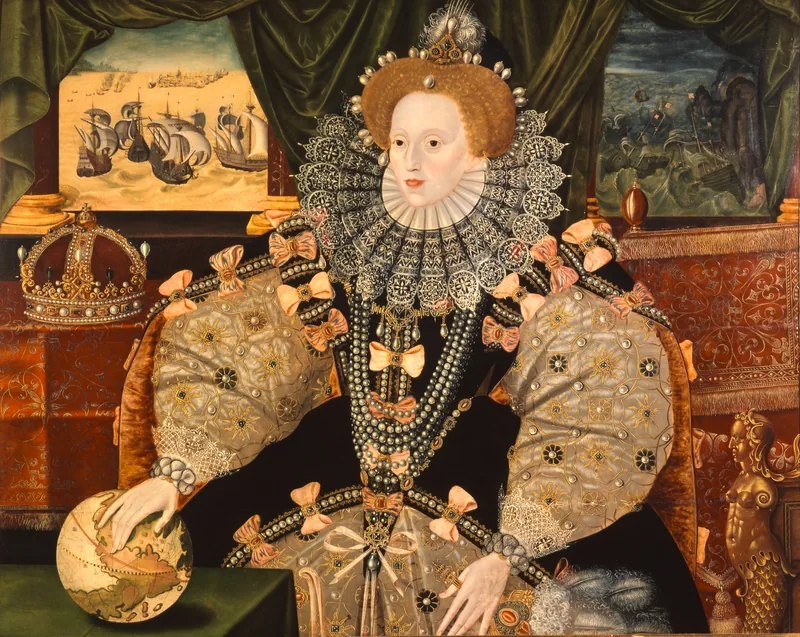
On 19 July 1588 the Spanish Armada was sighted off the Lizard in Cornwall. Beacons were lit along the coast. Off Calais, on the night of 28 July, the English sent in eight fireships. “Although no Spanish ships caught fire, the attack made the Spaniards panic, cut their anchor cables and scatter out to sea.” [source]
Keep exploring
- The Tudor monarchs — from Bosworth to a reign of nine days.
- Hampton Court — H and A in the roof, and a game of tennis that ended in arrest.
- The Mary Rose — a 34-year career, and a gust in the Solent.
- egypt.ages.im — another official long story, on the Nile.
Enjoyed this Tudor desk?
No pop-ups. No intrusive advertising. Just interesting stuff. A little support helps the next ages.im site get built.