19 July 1545
The Mary Rose, and the king who was watching
She was 34 years old, one of Henry’s favourite ships, and she did not sink on her maiden voyage. He watched from Southsea Castle.
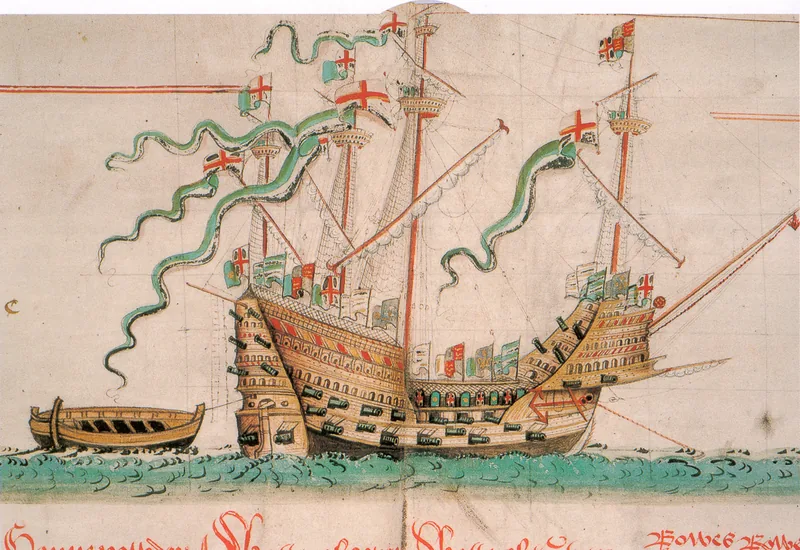
“The Mary Rose was built in 1510-11 at the start of Henry VIII’s reign and was one of his favourite ships for 34 years, until it sank in 1545.” The Mary Rose Trust is blunt about a common mistake: she did not go down on her maiden voyage. That first voyage as a warship, the official timeline says, was 17 April 1512. [source] [source] [source]
Henry’s fleet, the Trust says, grew from five ships at the start of his reign to 53 by the time of his death in 1547. The earliest reference to the Mary Rose is 29 January 1510, in a letter ordering the construction of “two new ships” — the Mary Rose and her sister, the Peter Pomegranate, built at Portsmouth. [source]
It is often claimed that she was named after Henry’s sister, Mary Tudor. “No evidence supports this.” The fashion was to name ships for saints, and the pairing of Mary with Peter fits that fashion. The badges — the rose for the king, the pomegranate for Katherine of Aragon — celebrated the royal couple. The Virgin Mary was also known as the ‘Mystic Rose’. [source]
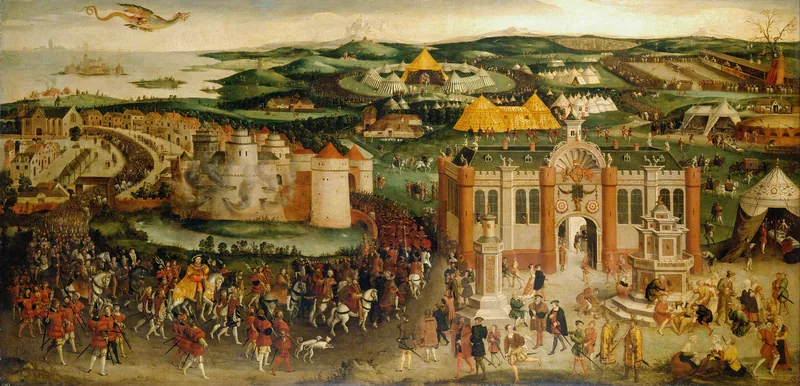
In 1520 the Mary Rose escorted Henry to the Field of the Cloth of Gold. In May 1522, at 2pm on the 30th, Henry and Charles V boarded and inspected the Henry Grace à Dieu and the Mary Rose; “Henry was showing off his favourite ships.” [source] [source]
The afternoon she went down
In July 1545 a French fleet of, the Trust says, over 200 ships — “significantly larger than the Spanish Armada that arrived on our shores nearly 50 years later, which totalled 130 ships” — entered the Solent. The English amassed around 80 ships. Henry was dining on his flagship, the Henry Grace à Dieu, when the French were sighted, and left hurriedly for shore. [source]
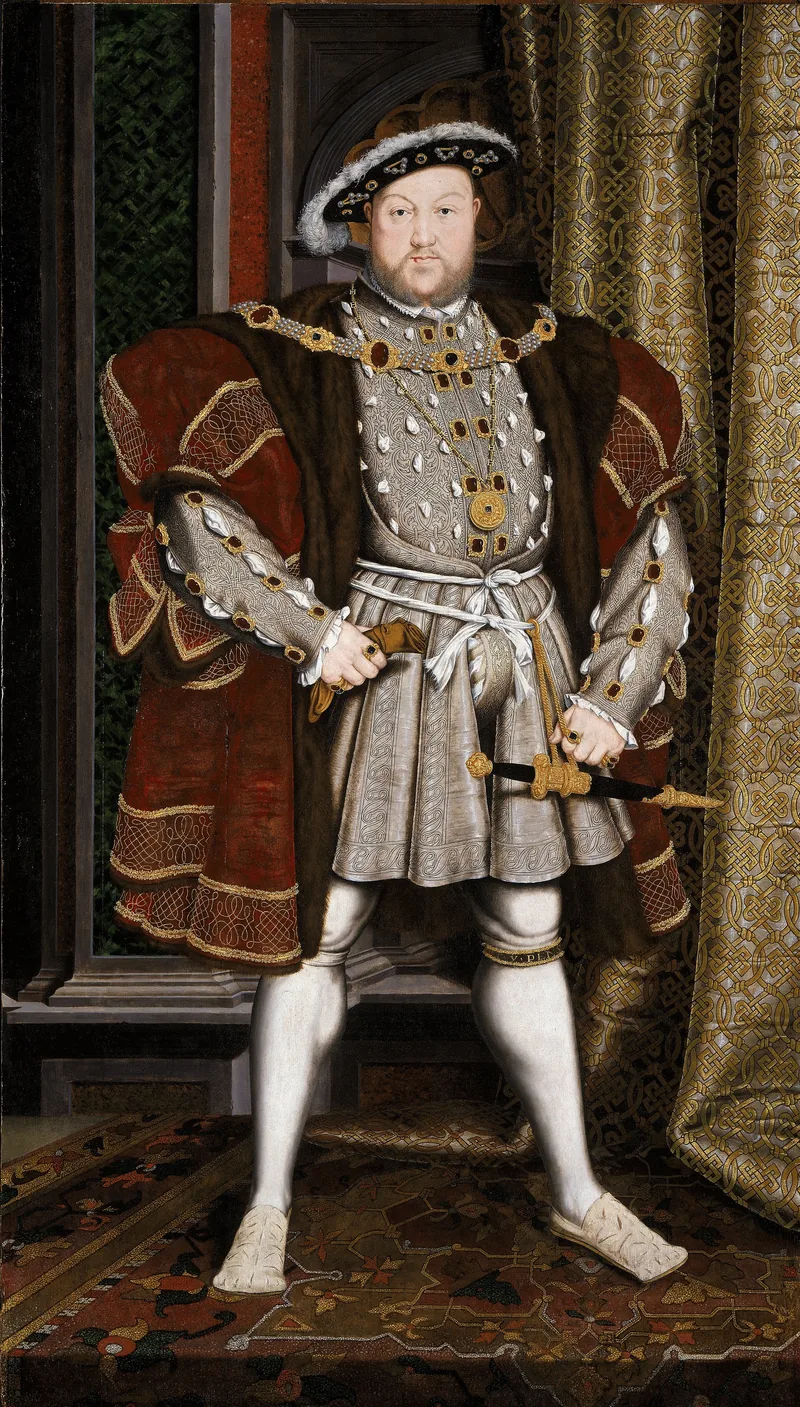
“Henry watched from Southsea Castle as the battle progressed.” Towards evening, the Mary Rose of Vice-Admiral George Carew foundered. The only confirmed eyewitness, a Flemish sailor, said she had fired her starboard guns and was turning when a gust caught her sails and pushed open gunports below the waterline. [source] [source]
The Imperial Ambassador, Francois van der Delft, writing on 24 July 1545, told Charles V that “all the 500 men on board being drowned save about 25 or 30 servants, sailors and the like.” [source]
The Trust is also clear about what the loss was not. She was 34 years old, and had travelled from Scotland to the Atlantic coast of France. A refit in 1536 had been followed by a voyage through more turbulent waters than the Solent. There is “no evidence” that the gunports were cut too low. A French claim that she was sunk by guns is recorded, and left as a claim. [source]
Salvage was expected as early as 3 August 1545. It did not succeed. The Anthony Roll, an inventory of the English navy presented to Henry VIII in 1546, still includes the Mary Rose, “which had sunk the previous year.” The ship was finally raised on 11 October 1982. [source]
Keep exploring
- The Field of the Cloth of Gold — the meeting she escorted the king to in 1520.
- The Spanish Armada — a later fleet, smaller than the French one of 1545, on the Trust’s figures.
- Hampton Court — the favourite house, as she was a favourite ship.
Enjoyed this Tudor desk?
No pop-ups. No intrusive advertising. Just interesting stuff. A little support helps the next ages.im site get built.