The crucial event
The break with Rome, and a priory dissolved in 1537
In 1533 Henry declared that he, not the Pope, was the head of the Church in England. The monasteries followed — and so did a rising in the north.
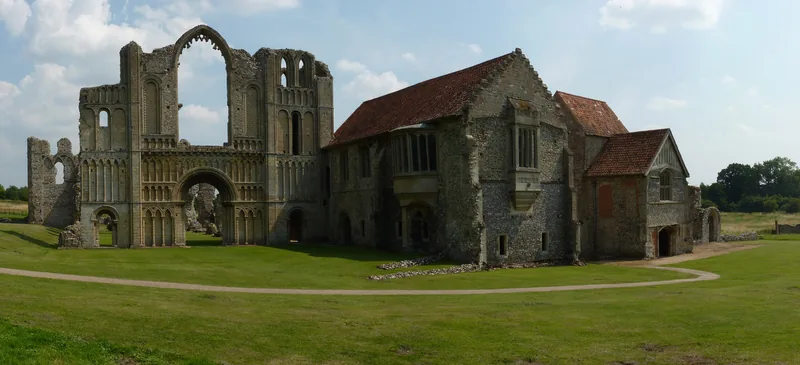
English Heritage calls the Reformation of English religion “the most crucial event of the Tudor period.” “In 1533 he declared that he, not the Pope, was the head of the Church in England.” Along with Thomas Cromwell he launched the Suppression, also known as Dissolution, of the Monasteries (1536–40). There was the Pilgrimage of Grace (1536–7). Castle Acre Priory “was dissolved in 1537.” [source]
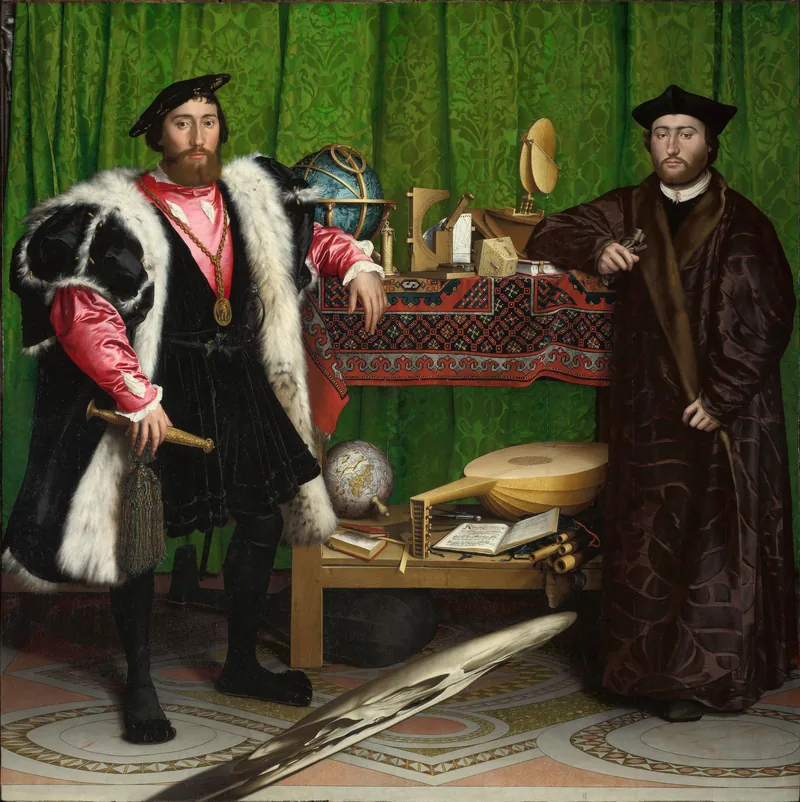
Holbein’s painting The Ambassadors is dated 1533, the same year as that declaration. It is a picture from the year, not itself an official statement of the break with Rome.
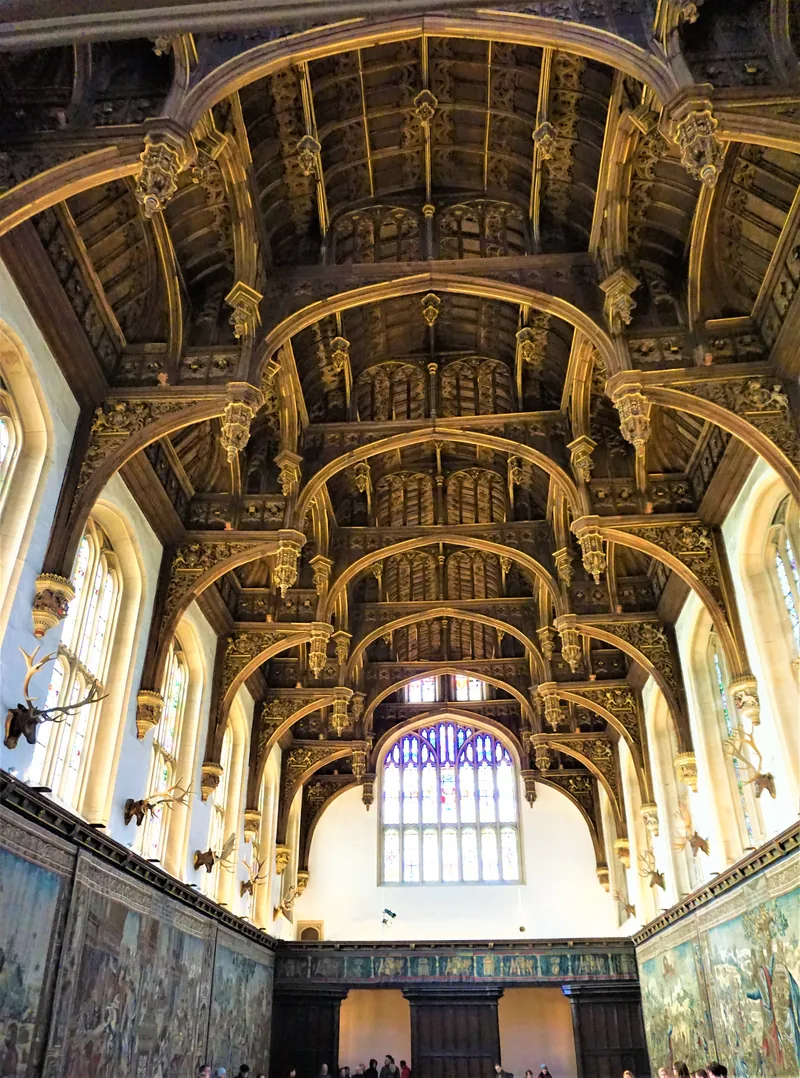
At Hampton Court the story is personal. Wolsey “had died in disgrace in 1530 having failed to secure the annulment of Henry VIII’s marriage to Katherine of Aragon.” By then, Historic Royal Palaces says, Henry had taken over the palace. In the Great Hall the letters of a later wife, Anne Boleyn, are still in the wood. [source]
Radical Protestant reform, English Heritage says, “began only with the accession of the bookish boy-king Edward VI (r.1547–53).” There was “a West Country rising against the new Protestant Book of Common Prayer (1549).” Mary I, “a convinced Catholic,” “immediately set about reversing the Reformation.” [source]
Keep exploring
- The Tudor monarchs — from the break with Rome to Elizabeth.
- Hampton Court — Wolsey’s fall, and Anne’s initials.
- The fact file — official sentences, kept close to their sources.
Enjoyed this Tudor desk?
No pop-ups. No intrusive advertising. Just interesting stuff. A little support helps the next ages.im site get built.