7–24 June 1520
The Field of the Cloth of Gold: a palace of canvas, and a firework dragon
Six thousand men built a temporary palace whose walls were painted to look solid. In front, fountains ran with wine and beer.
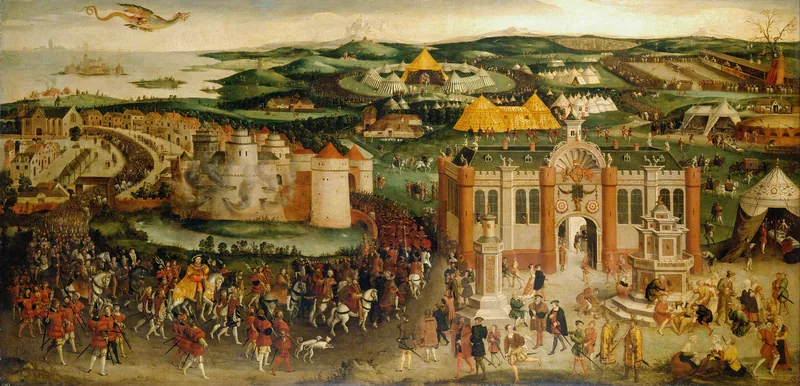
The Royal Collection’s official description of this painting — British School, circa 1545, previously attributed to Holbein, RCIN 405794 — says the meeting between Henry VIII and Francis I “took place between 7 to 24 June 1520 in a valley subsequently called the Val d’Or, near Guisnes to the south of Calais.” The event “derived its name from the sumptuousness of the materials used for the tents, pavilions and other furnishings.” [source]
A palace was “specially erected for the occasion by six thousand men from England and Flanders sent ahead of the royal party.” It stood on brickwork foundations, “but the walls and roof were made of canvas painted to look like a solid structure.” The timber came from the Netherlands, the windows were of real glass, and the façade was adorned with sculpture. [source]
“Two fountains in front of the palace provided wine and beer for people’s consumption (the over-indulgence of which leads some of the figures in the painting being sick or engaging in brawling).” In the top left is “the dragon (or salamander) firework, which was released on 23 June.” [source]
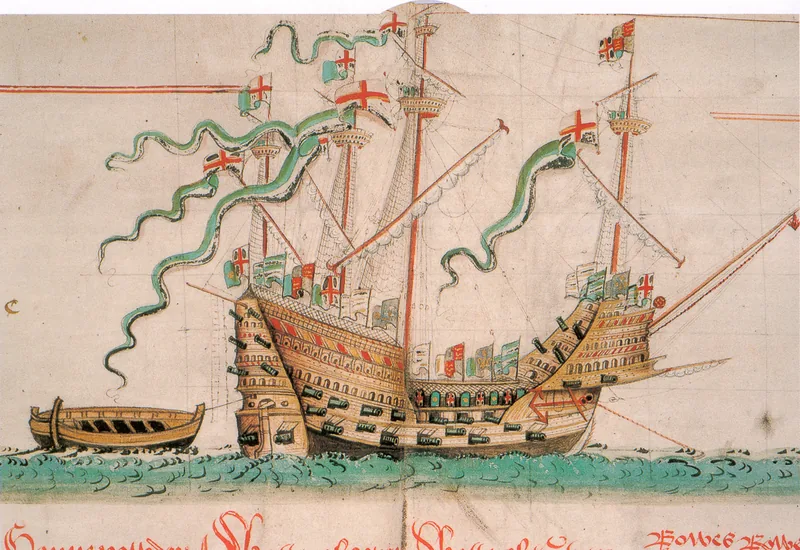
The Mary Rose Trust adds a ship to the same occasion. In July 1514 the Mary Rose had been decommissioned; in June 1520 she “briefly returned to service” to escort Henry to the meeting, “a glamorous display of the wealth and grandeur of the two countries.” [source] [source]
Henry entered Guînes on 5 June, the Royal Collection says, accompanied by Catherine of Aragon, “who appears not to be represented in the procession.” Cardinal Wolsey rides alongside the king. The formal meeting takes place in a rich tent in the centre background; to the right is the tournament field, and in the corner the tree of honour. [source]
Keep exploring
- Hampton Court — a lasting palace, begun in the same reign.
- The Mary Rose — the favourite ship in the escort.
- The Tudor monarchs — Henry VIII’s long reign around this fortnight.
Enjoyed this Tudor desk?
No pop-ups. No intrusive advertising. Just interesting stuff. A little support helps the next ages.im site get built.