A favourite palace
Hampton Court: 1,600 meals, a tennis arrest, and letters in the roof
Wolsey began it. Henry took it, and brought all six of his wives. Victoria later threw the gates open.
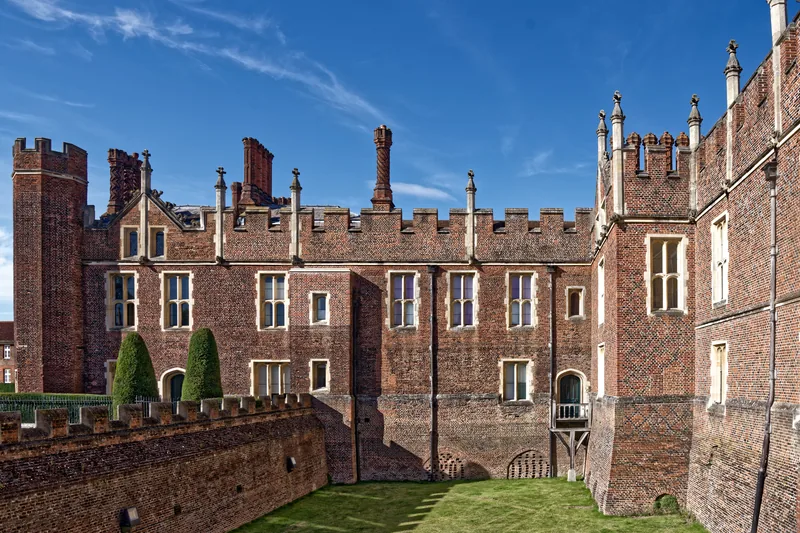
“The original Tudor Hampton Court Palace was begun by Cardinal Thomas Wolsey in the early 16th century. But it soon attracted the attention of Henry VIII, who brought all his six wives here.” “Wolsey was so successful in his work that Henry eventually took Hampton Court for himself.” The official story page does not give that takeover a year. [source]
A sister page is more personal. “Henry VIII had over 60 homes, but Hampton Court Palace was his favourite. Once he had taken it from Cardinal Wolsey, the King transformed it further to demonstrate his power and magnificence.” [source]
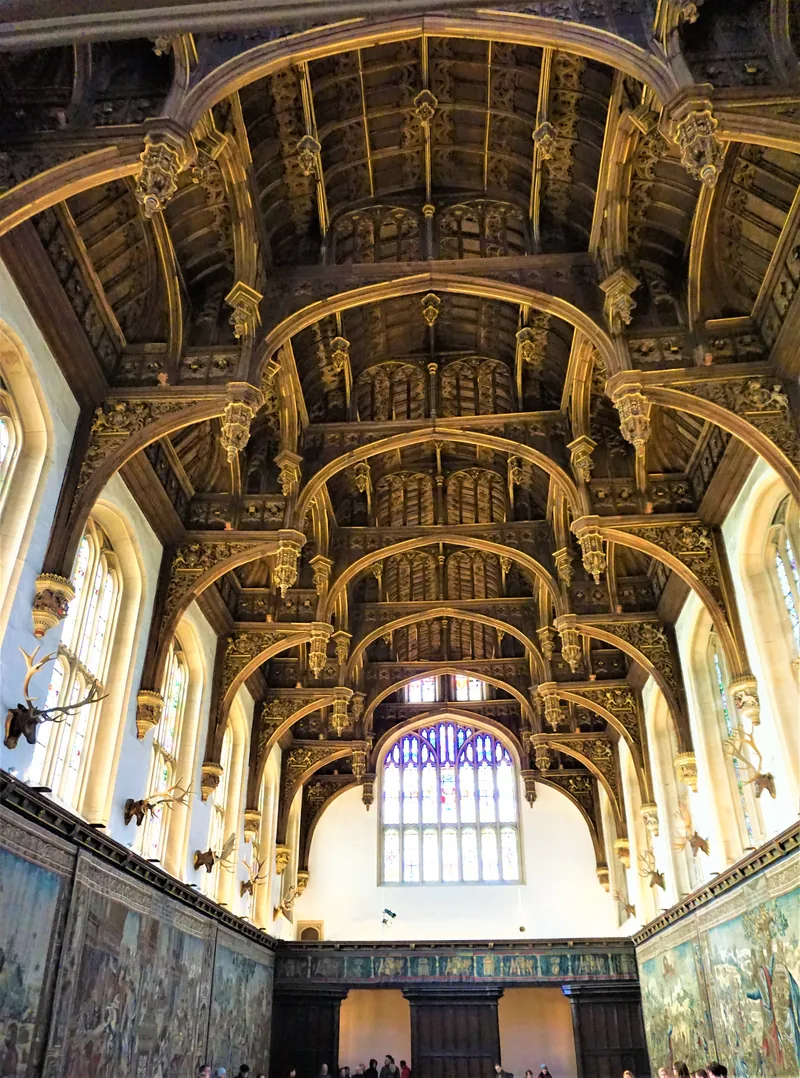
Masons and bricklayers began work on the present Great Hall in 1532, replacing a smaller hall built between 1495 and 1514 and later remodelled by Wolsey. “Wolsey had died in disgrace in 1530 having failed to secure the annulment of Henry VIII’s marriage to Katherine of Aragon. By this time, Henry had taken over Wolsey’s palace at Hampton Court.” [source]
By the time carpenters began the huge timber roof in 1533, Henry was married to Anne Boleyn. They added her coat-of-arms, carved the entwined letters H and A on the wooden screen, and put her falcon badge and the initials AR for Anna Regina into the roof. “These poignant reminders of Anne’s time as Queen can still be seen today.” [source]
Look higher, and there are the ‘Eavesdroppers’ — carved and painted heads. Historic Royal Palaces is careful: “While we’re not clear why they were placed there, perhaps they were intended as a warning to gossiping courtiers.” [source]
A kitchen like a food factory
By the 1530s, Henry’s Hampton Court was “a palace, a hotel, a theatre and a vast leisure complex.” Around Base Court “there were 30 suites of lodgings used for the grandest visitors.” “Up to 800 courtiers could accompany Henry VIII; all needed to be fed.” The kitchens “became an efficient food factory serving 1600 meals a day.” The king enlarged the existing Great Kitchen, “built in the late 1400s by a former resident Lord Daubeney.” [source]
In the Great Hall, meals cooked in those kitchens were served twice a day. “Sittings for dinner started at 10 o’clock in the morning and for supper at 4 o’clock in the afternoon.” [source]
Tennis, and an arrest
Historic Royal Palaces calls tennis the favourite game of Henry VIII. In 1519 the Venetian Ambassador wrote: “it was the prettiest thing in the world to see him play; his fair skin glowing through a shirt of the finest texture.” The first tennis court at the palace “was built for Cardinal Wolsey between 1526 and 1529.” [source]
And then the official page has the line that stays in the head. “Henry’s second wife Anne Boleyn was gambling on a game of tennis when she was arrested to be taken to the Tower of London. She even complained that she couldn’t collect her winnings!” [source]
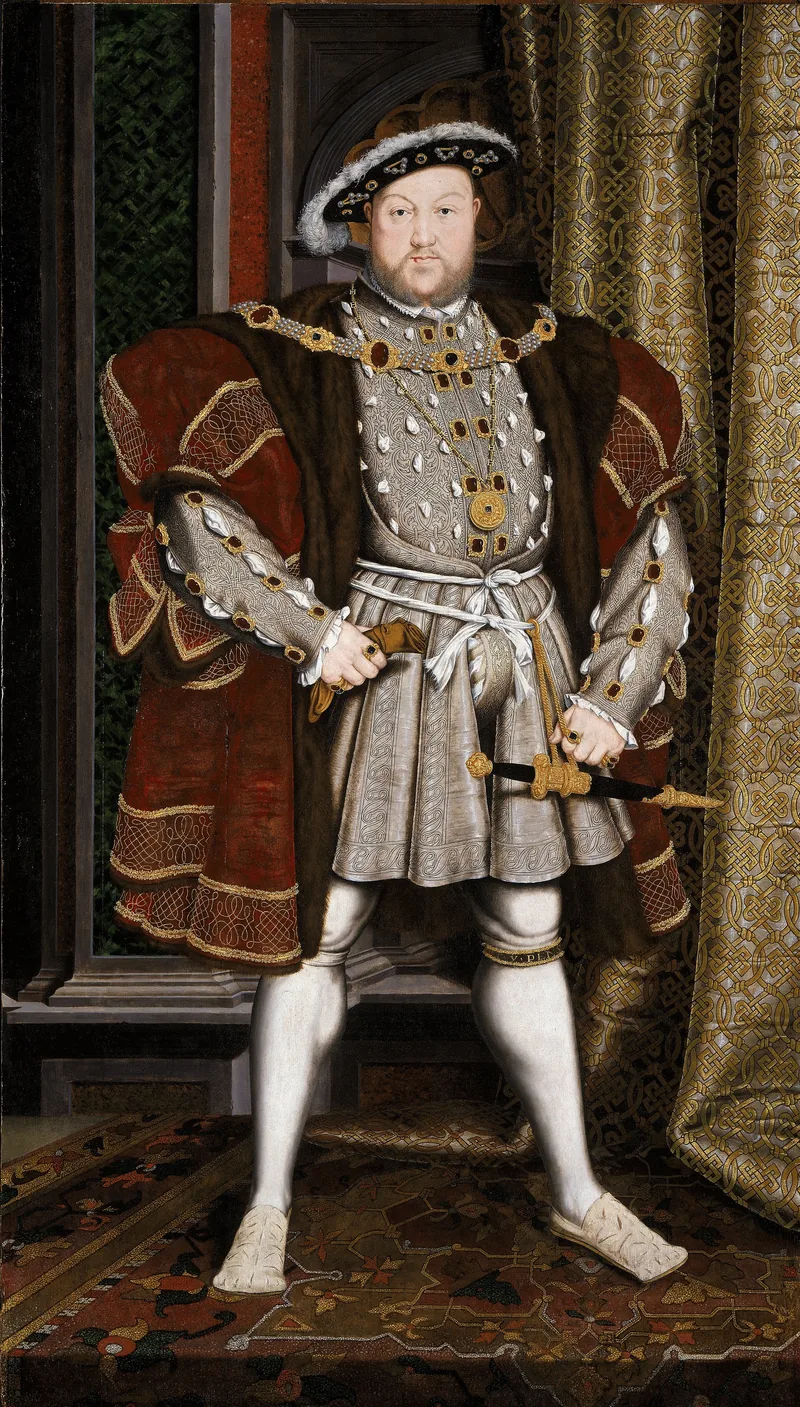
“All of Henry VIII’s six wives visited Hampton Court Palace.” “Henry’s third queen Jane Seymour died giving the King a longed-for son, Edward, later Edward VI.” “Henry’s fifth wife Catherine Howard was arrested here and later executed at the Tower of London for adultery and treason.” [source]
On the walls of the Great Hall hang the Abraham tapestries, first hung there in 1546, woven in Brussels from wool, silk, and gold and silver thread. When the Royal Collection was valued after the execution of Charles I in 1649, they were priced at £8,260 — “the most valuable items in the collection.” [source]
The palace did not stay shut. “In 1838, Queen Victoria ordered the gates of Hampton Court Palace be ‘thrown open to all her subjects’… By 1881, over ten million visitors had been recorded.” [source]
Keep exploring
- The Mary Rose — another favourite, lost in the Solent.
- The Field of the Cloth of Gold — a temporary palace on a still grander scale.
- The Reformation — the break that sent Wolsey into disgrace.
Enjoyed this Tudor desk?
No pop-ups. No intrusive advertising. Just interesting stuff. A little support helps the next ages.im site get built.